
There’s something quietly magical about Pokémon Yellow. By modern standards, it’s almost aggressively simple: static battle screens, minimal animations, a limited color palette, and mechanics that can be explained in minutes. And yet—decades later—it remains deeply engaging.
That contrast is exactly why Pokémon Yellow still matters.
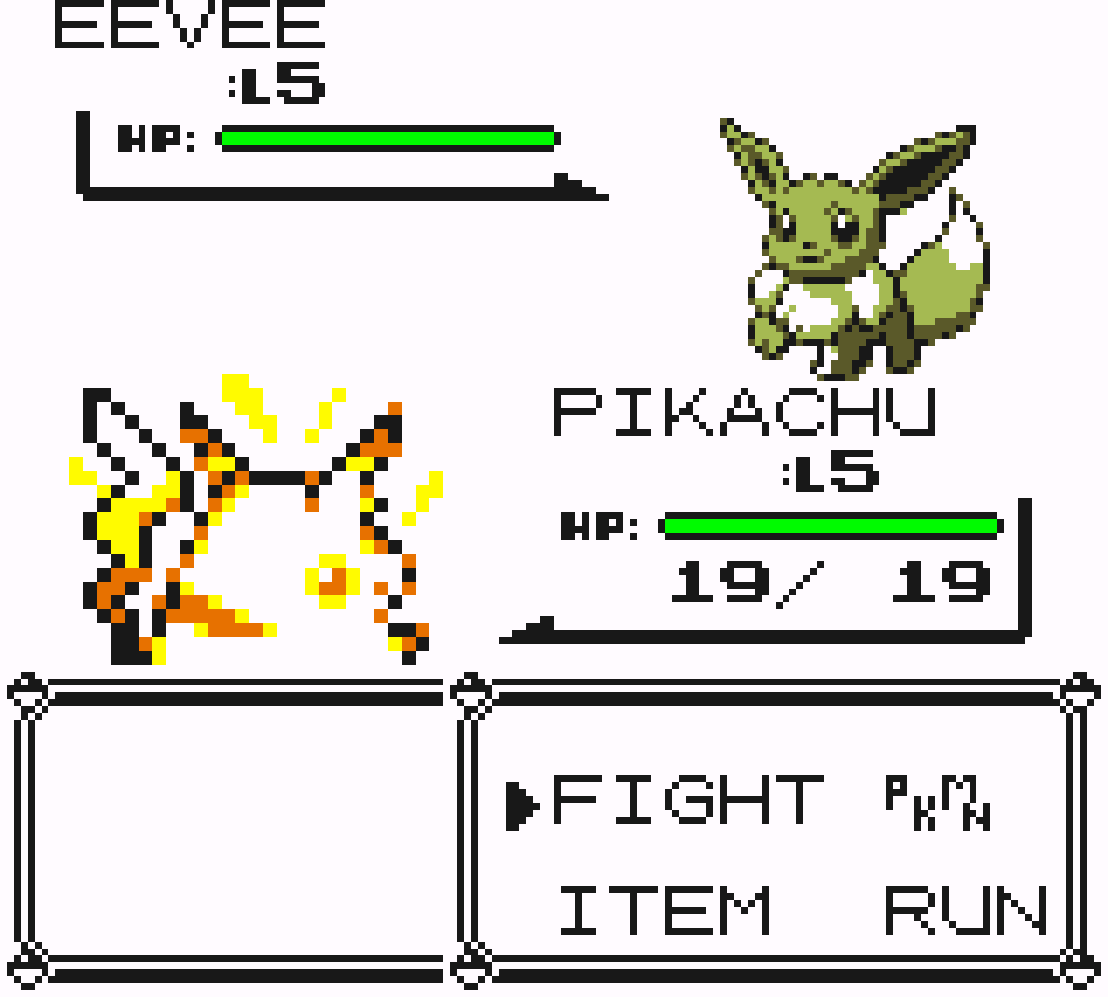
Static Screens, Dynamic Imagination
Battles in Pokémon Yellow barely move. Two sprites face each other. Menus pop up. Text scrolls by. No cinematic camera sweeps. No particle effects. No voice acting.
As a new dad, I’ve found myself thinking more about how much stimulation we pack into modern games and media. Returning to something this restrained has been unexpectedly refreshing—and a reminder that engagement doesn’t need to shout to be memorable.
And yet, every fight feels alive.
Why? Because the game lets your imagination do the heavy lifting. When Pikachu’s HP drops into the red, tension spikes—not because the screen shakes, but because we’ve come to care about this arrangement of yellow pixels. The feedback loop is clean and readable: numbers go down, sound cues change, and the stakes are instantly clear. Nothing distracts from the decision in front of you.
It’s a reminder that engagement doesn’t come from visual complexity—it comes from clarity.
A World That’s Easy to Read
Kanto is remarkably legible. Towns are compact. Routes are straightforward. Every tile communicates purpose. You rarely feel lost, and when you do, it’s intentional—Viridian Forest being the perfect early example of “safe confusion.”
This simplicity creates momentum. You’re always moving forward, always discovering something new, without being overwhelmed by systems or UI. The game respects your time while still rewarding curiosity.
In earlier game development projects, I often caught myself adding filler or unnecessary backtracking just to hit an arbitrary “game length.” Revisiting Pokémon Yellow has been a reminder that intentional design matters far more than sheer runtime.
That’s not an accident—that’s disciplined design.
Pikachu as Emotional Design
Pokémon Yellow’s biggest twist isn’t mechanical—it’s emotional. Pikachu follows you. Reacts to you. Refuses to evolve. It’s mechanically weaker in some ways, but emotionally stronger in all the ways that matter. Even when Pikachu becomes the weakest member of my lineup, I’m still drawn to keep him on the journey.
Those tiny sprite turns and sound effects do more to build attachment than many modern games manage with full cutscenes. It’s proof that player connection doesn’t require realism—just consistency and intent.

Why It Still Works Today
In an era of hyper-detailed visuals and layered systems, Pokémon Yellow is a masterclass in restraint. It shows that:
- Static visuals can still feel dynamic
- Simple mechanics can carry long-term engagement
- Emotional investment beats technical spectacle
For game developers especially, it’s worth revisiting—not as nostalgia, but as a design study. Strip away the polish, and what remains is a rock-solid core loop built on readability, pacing, and player imagination.
Sometimes, the most powerful games don’t try to impress you.
They just invite you in—and never let go.